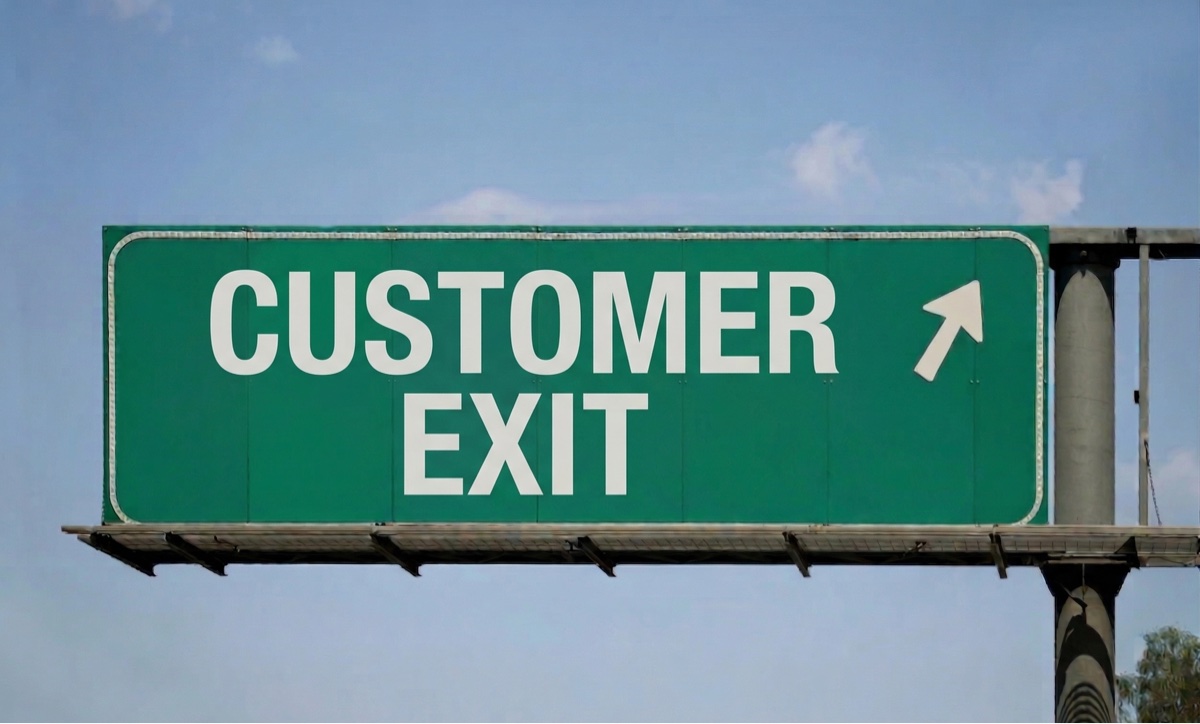
You won't get a formal letter or a sudden, dramatic phone call. One day you're their top carrier, the next you start seeing fewer loads, then none at all. Losing a customer is rarely a surprise event. It’s a slow bleed, and the warning signs are always there if you know where to look.
The challenge is that most freight operators are too busy running their daily jobs to notice these subtle shifts until it's too late. This has happened countless times with freight businesses. The customer doesn't fire you; they just quietly start giving their volume to another company. By the time you realize what’s going on, the replacement is already settled in.
Here are five key warning signs and some practical steps you can take for each one.
The sign: The warehouse manager emails, asking for last month's delivery performance data, or maybe the on-time percentage for a specific route, or a breakdown of exception rates. You don’t have it ready. You end up promising to get back to them and then spend two hours manually compiling numbers from spreadsheets, driver sheets, and memory.
What’s really going on: Shippers don't ask for data on a whim. They ask because someone higher up, a supply chain manager or procurement lead, is formally reviewing carrier performance. If you can’t quickly provide the numbers, it looks like you don’t track them. And if you aren't tracking them, how can you possibly improve?
What you can do: You need reporting data. At a minimum, you should be able to pull delivery performance and exception summaries. If your current setup makes this take hours, you have a critical gap you need to close before the next request comes in.
The sign: Emails that used to be just between you and your main contact now include new names. You start seeing job titles like "Procurement Manager" or "Logistics Compliance Lead" popping up in the thread.
What’s really going on: Your customer is bringing in formal decision-makers. This usually signals a formal carrier review or the initial stages of building a case to switch. Your good relationship with your day-to-day contact is no longer enough to protect the relationship. The people being copied in are evaluating you against formal, professional criteria.
What you can do: Treat every email in that thread as if it were a formal proposal. Be precise, professional, and back up your points with data. It’s even better to proactively send the kind of information these new people care about: up-to-date compliance documents, performance summaries, and safety records. Show them you are already operating at the professional level they expect.
The sign: You used to handle 40 jobs a week for them, but now it's 30, then 25. No one has explicitly said why. When you ask, you get vague answers like "volumes are down everywhere" or "we're restructuring a few routes."
What’s really going on: They are testing your replacement. Shippers rarely cut a carrier immediately. They gradually redirect volume to minimize risk during a trial period with the new carrier. If your loads are dropping but their overall business hasn't shrunk, your freight is going elsewhere. You are the control group they are planning to phase out.
What you can do: Ask directly, but keep it professional. Try something like, "I've noticed our weekly volumes have dropped from X to Y. Is there anything specific we need to address or improve on our end?" This shows you are paying attention, and it forces an honest conversation. You’ll either hear about a fixable problem or get the clarity you need to plan your next step.
The sign: Your customer asks if you can connect to their Warehouse Management System (WMS). They ask about Electronic Data Interchange (EDI) or if your system supports automated status updates via an Application Programming Interface (API). You have to say no, or promise to look into it and then never follow up.
What’s really going on: The shipper is modernizing and standardizing their internal tech stack. They want carriers who can plug into their systems seamlessly, not carriers who require a phone call for every delivery confirmation. For large 3PLs and enterprise shippers, system integration is becoming a fundamental requirement. If you can’t connect, your service reliability might not even matter, you can’t compete.
What you can do: You need a Transport Management System (TMS) that is already capable of API and EDI connections. You don’t need to switch the integration on right now, but having the technical capability means you can confidently say "yes" when they ask. That simple "yes" can often save a contract.
The sign: Your main contact used to call often to sort out issues, adjust schedules, and plan peak season. Now, it’s crickets. Emails get minimal, short replies. Calls go straight to voicemail. This might feel like "no news is good news," but in freight, silence is often the opposite.
What’s really going on: They have mentally checked out. The decision to switch carriers has likely been made, or is very close, and your contact is trying to avoid an uncomfortable conversation. Many logistics managers genuinely dislike telling a long-term partner they are being replaced and will ghost them until the formal notice has to be sent.
What you can do: Be proactive and re-engage. Don't wait for them to reach out. Send them a performance summary they didn't request. Flag a recent operational improvement you’ve made. Suggest a casual quarterly review meeting. Your goal is to demonstrate that you are invested in the relationship and want to restart the conversation.
When you look at these five signs, a pattern emerges: they are almost all about capability gaps, not simple service failures. Most customers are lost not because of one missed delivery, but because the carrier couldn't provide what the customer needed at a systems level, data, reporting, integration, and fast responsiveness. Shippers are simply evolving their businesses, and they need carriers who can evolve alongside them. The great news is that every single one of these gaps is fixable. It often just comes down to having the right technology in place, a system that captures performance data, automates your reporting, supports key integrations, and gives you the facts you need to answer any question your customer throws at you. If you recognise one or more of these signs in your current relationships, the worst response is doing nothing. The best thing you can do is get ahead of it.
Book a free discovery call, and we can talk through your operation to identify where your gaps are and what it would take to close them, before your customer decides to close the door.