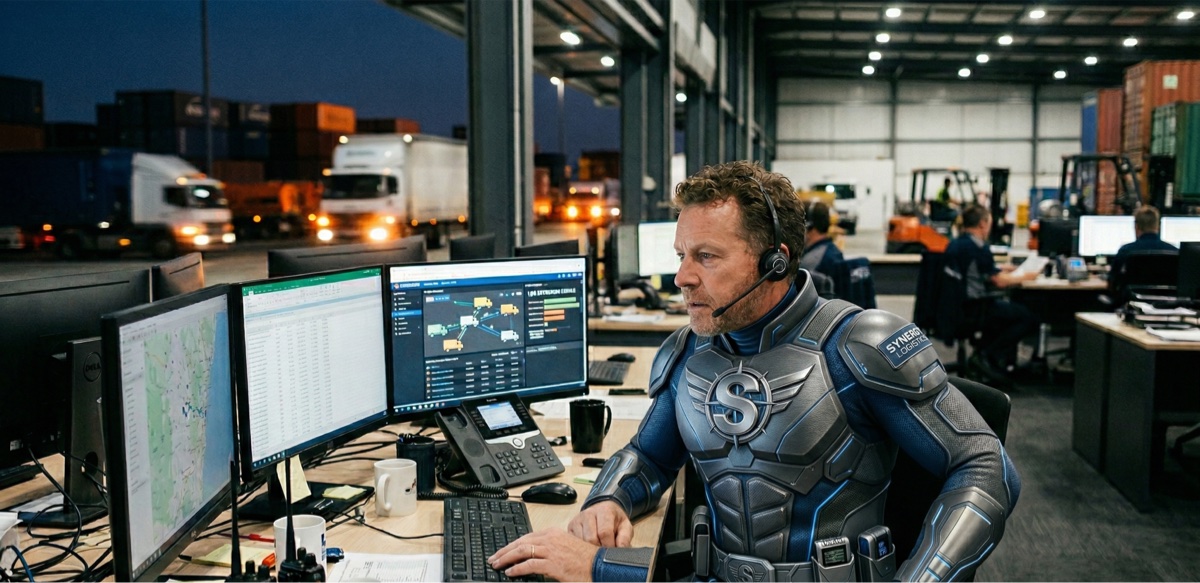
You probably know who I'm talking about before I even describe them.
They've been with you for years. They know every driver by name and which ones will push if you ask and which won't. They know the regular customers' quirks, which location closes at 11:30 sharp, which warehouse manager will sign off without a fuss, and which run always runs late on Fridays. They personally manage the relationships with your top three accounts. When something goes wrong, they fix it before you even know it happened.
They are, in every practical sense, the engine of your operation.
And that's the problem.
In the freight industry, especially among smaller operators, there's a pattern that shows up again and again. The business grows to a certain size, past the point where the owner can run dispatch themselves, and one person steps up, gets good at it, and effectively becomes the brain of the operation.
Over time, that person accumulates knowledge that isn't written down anywhere. The customer who needs to be called if a run is going to be late (not emailed, called). The driver who can do the tight city work, but shouldn't be put on the regional runs. The backload arrangement with the third-party carrier is on a handshake. The rate exceptions that were agreed to verbally never made it into the system.
This knowledge lives in one person's head. And the business, without fully realising it, has built its operations around that person's availability.
It usually starts with a sick day that turns into a week. Or a family situation that means distracted performance for a month. Or a resignation that comes with two weeks' notice, sometimes less.
And suddenly, the operation that looked so smooth reveals itself. Drivers calling in and not knowing who to report to. Customers are ringing for updates, and nobody is having the right answers. Jobs are getting double-booked or missed because the mental map that held everything together isn't there anymore.
The scramble that follows is brutal. The owner ends up back in dispatch. Senior drivers start making calls they shouldn't have to make. Customers start to notice. A couple of accounts start wondering whether there's a more reliable option.
This is the single most common growth ceiling for small freight operators. Not capital. Not trucks. Not drivers. The dependency on a person who became indispensable.
Part of it is gratitude. When someone does their job brilliantly, you don't want to question the arrangement. The hero dispatcher is usually proud of what they know and how essential they are, and to be fair, that pride is earned. The relationship works, and it feels disloyal to identify it as a risk.
Part of it is that the problem is invisible when everything is fine. A dependency on one person only looks like a problem when that person isn't there. When they're working well, the operation runs well, and there's no obvious signal that the foundations are fragile.
And part of it is that fixing it requires slowing down to document and process things that currently run on instinct. In a busy freight operation, finding time for that feels impossible. The urgent always beats the important.
There's another angle here that gets talked about even less: what this arrangement does to the dispatcher.
Being indispensable is exhausting. When you're the only one who knows how to handle a situation, you're always on. Your phone doesn't stop when you leave the depot. You can't take a proper holiday because the operation falls apart without you. Every escalation comes to you. Every problem is your problem to solve.
Over time, this wears people down. The hero dispatcher is statistically likely to burn out or to find a job somewhere that doesn't require them to carry the entire operation on their shoulders. When they leave, they often leave faster than you'd expect, because they've been running on empty for longer than anyone knew.
The very thing that made them so valuable, the total ownership, the deep knowledge, the constant availability, is the thing that eventually drives them out.
The carriers who've broken the hero dispatcher dependency tend to have done a few things deliberately:
They wrote the tribal knowledge down. Customer notes, driver notes, account quirks, rate exceptions, all of it in a place that isn't someone's head. This takes time and feels like overkill until the day it saves you.
They cross-trained. Not so that the hero dispatcher can be replaced, but so that at least one other person can cover the basics. A driver who comes off the road and into dispatch. A second-in-command who understands the runs well enough to hold things together in a crisis.
They created handoff practices. End-of-day notes. Job status records. A way of communicating the state of things that doesn't depend on one person being physically present.
They treated the dispatcher as a business partner, not just an employee. Better hours, better pay, clearer career path, genuine acknowledgement of what they hold. Retention is the first line of defence against the dependency becoming a crisis.
None of this is complicated. All of it takes deliberate effort that the business rarely prioritises until there's no choice.
Most freight operators with 15-25 trucks could not maintain normal service for more than 48 hours if their key dispatcher disappeared tomorrow.
That's not a criticism. It's an extremely common operating reality in this industry. But it's worth sitting with. The same operator who wouldn't carry a load in an unroadworthy truck is often completely comfortable with the entire operation resting on one person's continued availability.
The truck gets the maintenance schedule. Does the operational structure get the same attention?