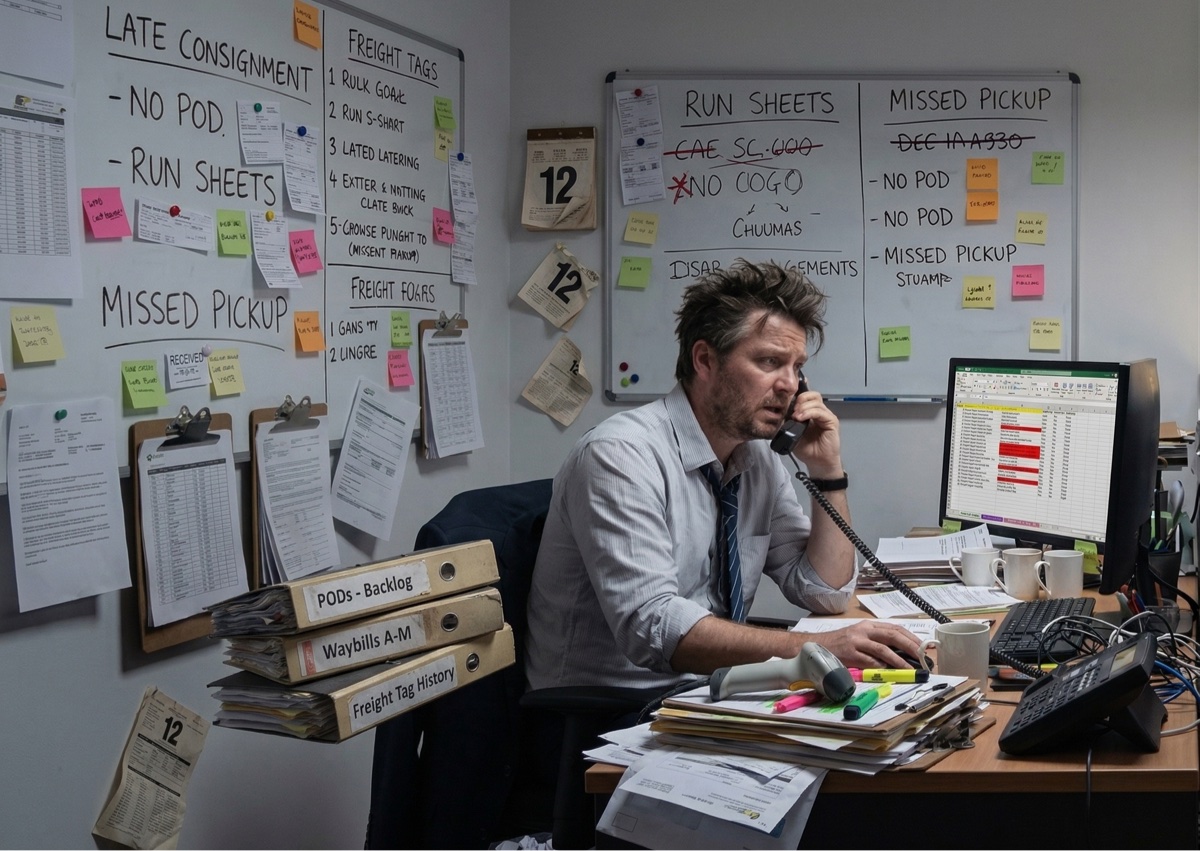
For many carriers, the move off paper gets delayed for one simple reason: it feels bigger than it needs to be. The usual worries are understandable.
Those are real concerns. And for smaller operators, they matter. But the move from paper to digital does not have to be an overnight switch.
The approach is meant to be guided and staged rather than rushed. The broad structure looks like this:
Before anything changes, the first step is understanding how the business works today.
That matters because good software should support the operation, not force the operation to bend around the software.
Design a process to match how the carrier already works. That includes things like:
For a carrier, this is often the difference between a rollout that feels practical and one that feels overwhelming.
One of our strongest recommendations is to start with a small pilot. That might mean one vehicle, one region, or one customer.
It's a sensible way to go live because it reduces risk and gives the team room to build confidence before expanding further.
Training sticks better when it happens close to the actual work. Practical and role-based for dispatch, admin, and drivers across the first 30 days. That's important because adoption usually has less to do with whether people “like technology” and more to do with whether the system feels clear and useful in their role.
Once the workflow is working properly in the system, a few benefits usually become more obvious:
That does not mean every problem disappears overnight. But it does mean the business spends less time chasing information that should already be available.
The move from paper to digital usually feels hardest before it starts. Once there is a clear process, a guided rollout, and a sensible pilot scope, it becomes much easier to picture.
For many carriers, the biggest risk is not changing too early. It is waiting so long that paper, spreadsheets, and manual follow-up keep absorbing time every single day.
The most successful transitions don't try to solve every problem on Day 1. They prioritise and protect dispatch and last-mile execution first. Once that's stable, you can safely move on to deeper optimization.
Book a Discovery Call →
We can walk through your current process, show you what the rollout would likely look like, and help you decide whether the timing is right.